
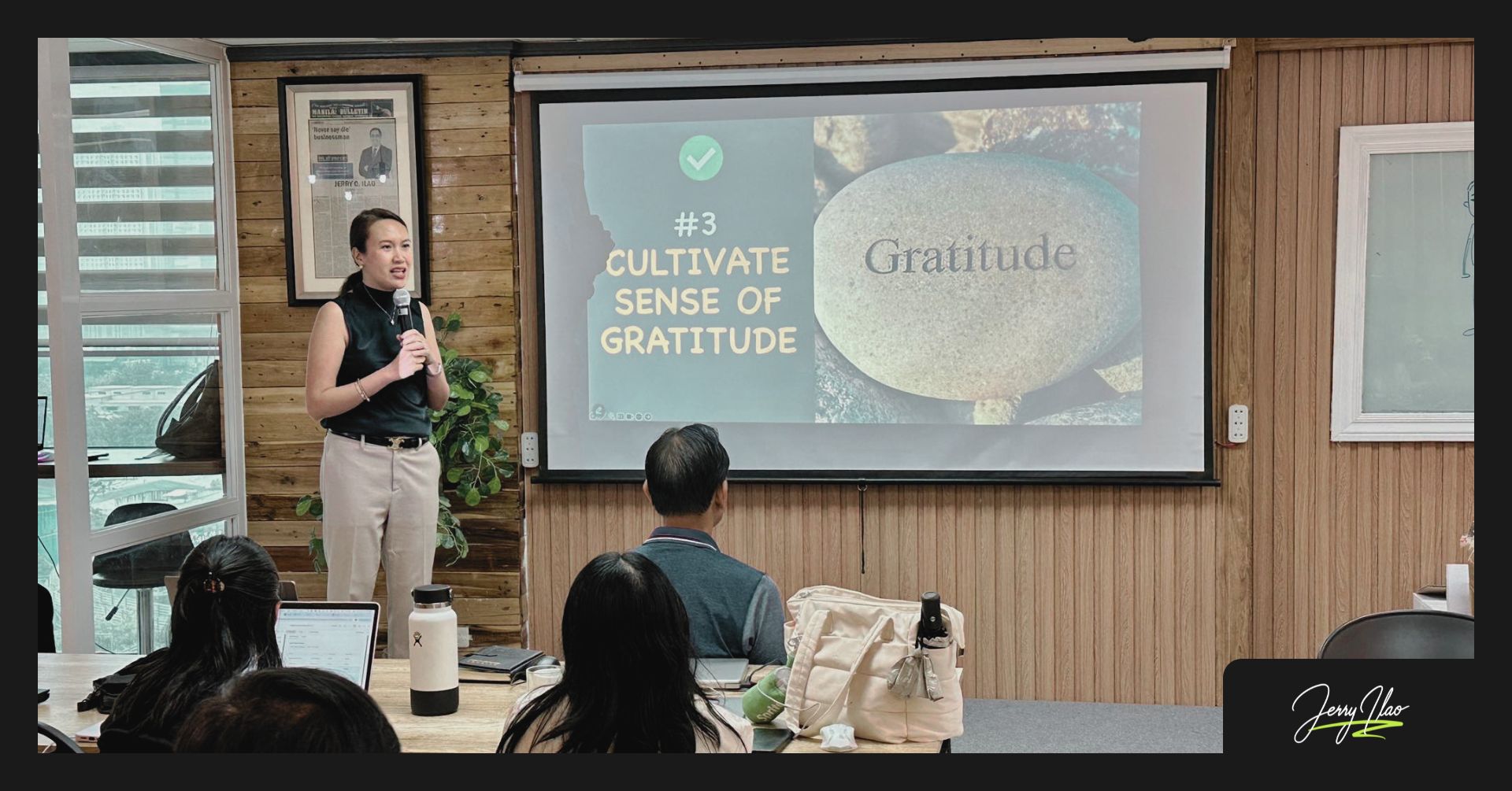

Practicing gratitude is the habit of actively noticing and naming what is good in your current situation, rather than defaulting to what is missing. For leaders and teams, it is not a soft skill add-on. It changes how people respond to pressure, how they treat each other, and how sustainable their performance is over time.
We shared this reminder with our team during our general assembly last week.
In a world that constantly pushes us to want more, do more, and be more, it is easy to lose sight of what is already in front of us.
A stable job. Good teammates. A loving family. A bed with a roof.
These are not small things.
And yet, because they show up every single day, we stop noticing them. They become background noise. The baseline. The things we only appreciate once they are gone.
That is the problem that practicing gratitude is designed to fix.
What we actually mean when we say “gratitude”
Gratitude as a concept gets flattened quickly. It becomes a motivational poster. A one-liner at the end of a company email. A box to tick in a culture initiative.
But that is not what we were talking about with the team.
What we mean is the discipline of paying attention to what is already working, before your brain defaults to everything that is not. It is a trained redirection of focus, not a suppression of problems.
There is a difference between toxic positivity and grounded gratitude. Toxic positivity says the problems do not exist. Grounded gratitude says the problems exist and so does everything that is going well, and we are going to hold both. That second posture is what makes teams resilient. It does not pretend. It just refuses to be defined by scarcity alone.
When we run leadership development programs through PAIBA, one of the consistent patterns we see in high-performing team leaders is this: they know how to zoom out. They can hold a difficult quarter alongside a genuine appreciation for what the team pulled off. That dual awareness is not accidental. It is a practice.
What happens when we forget
There is a slow drift that happens in teams that do not make this a habit, and it does not announce itself.
It shows up in the way people talk about their work. A mild flatness in meetings. The effort that goes unacknowledged. The wins that get skipped over because the next problem is already waiting. Small frictions that accumulate into a low-grade team dissatisfaction that is hard to name but easy to feel.
The manager who cannot see the effort in front of him because he is focused on the result that did not come. The team member who feels unappreciated not because no one values her, but because no one said it out loud. The leader who keeps setting higher bars without ever stopping to say: look how far we have come.
This is not a morale problem. It is an attention problem.
The default human tendency is to focus on gaps. Evolutionary psychology has a name for it: negativity bias. The brain is wired to notice threats and shortfalls because that vigilance historically kept people alive. But in a modern workplace, that same wiring makes good things invisible while making problems feel enormous.
Practicing gratitude is the counterbalance. It is training the brain to notice what is there, not just what is missing.
Why grounded leaders are grateful leaders
There is a version of ambition that is always chasing. It is restless, sometimes productive, and often exhausting for everyone around it.
Then there is a version that is rooted. It moves forward because it knows where it stands. It can hold high standards and still say, genuinely: I am glad to be here. I am glad this team exists. I am glad we got through that.
That second version is what practicing gratitude builds in a leader.
In the teams I have worked with through Olern and PAIBA, the leaders who show up most consistently over the long term are not the most intense ones. They are the ones who can regulate their own anxiety without transferring it onto the team. Who notice contributions, even small ones. Who thank people not as a management tactic but because they mean it.
That groundedness does not make them less ambitious. It makes them more sustainable. It also makes the people around them want to stay, and want to try harder, because they feel seen.
Grateful leadership is not weakness. It is the kind of strength that compounds over time.
How gratitude changes team performance, not just team morale
This is where most conversations about gratitude stop: at the feeling level. People feel better when they feel appreciated. That is true but it undersells the actual performance mechanism.
When team members feel genuinely seen, their threshold for effort shifts. They are more willing to raise a problem early rather than hide it. More willing to take on a stretch task without being pushed. More willing to give honest feedback upward, which is one of the most valuable things a team can generate.
A team that operates from a baseline of appreciation communicates differently under pressure. When things go wrong, and they always do, the default is problem-solving rather than blame. Because people who feel valued do not need to protect themselves first.
In practical terms: the teams in our PAIBA leadership cohorts that deliberately built gratitude practices into their routines reported faster recovery from setbacks, stronger peer accountability, and lower voluntary turnover in their departments. Not because gratitude magically solved structural problems. But because it built the relational foundation that structural problem-solving requires.
Morale is the visible surface. Performance is what is underneath it.
How to actually start practicing gratitude at work
Name one thing per day that you would miss if it were gone. Not a milestone. Not a big win. Just something ordinary that is actually working. A teammate who consistently delivers on time. A process that runs without drama. A conversation that went somewhere useful. The goal is attention training, not manufactured optimism. One specific thing, named internally, changes what your brain starts looking for over time.
Say it out loud to one person each week. Gratitude that stays internal is still gratitude, but it does not do anything for your team. The weekly discipline is this: pick one person and tell them specifically what you appreciated about what they did. Not “great work,” but “I noticed that you stayed to sort that out on Friday, and it made a difference to how the week closed.” Specificity is what makes it land. Generic praise is easy to dismiss. Specific appreciation is hard to forget.
Open your next team meeting with a win. Before the agenda, name one thing the team did right in the last seven days. It does not need to be a major accomplishment. It needs to be real and specific. This sets the tone and signals to the team that progress is being tracked, not just problems. Over time, it changes the emotional register of meetings from defensive to constructive.
Ask yourself, before escalating a complaint: what is still working? This is not about suppressing concerns. It is about grounding them. A grounded concern, one that holds “this is a problem and here is what is working around it,” is more actionable than a panicked one. Leaders who can do this communicate problems to their own leadership in a way that builds confidence rather than alarm.
Build a weekly team acknowledgment ritual. This can be as simple as two minutes at the end of a Friday standup where team members name one teammate contribution from the week. No performance review, no formal recognition program needed. Just consistent naming of what people actually did. Over three to four weeks, you will notice the team starts looking for things to name rather than waiting to be asked.
The ambition and the groundedness are not opposites
The concern people have when you talk about gratitude in a leadership context is that it softens urgency. That if people feel good about where they are, they stop pushing for something better.
That has not been the experience I have observed.
Grateful people are not less ambitious. They are just more aware of what they already have. And that awareness, that groundedness, is what keeps them from burning out or burning others along the way.
The leaders I have seen struggle most long-term are not the ones who lacked ambition. They are the ones who could not stop long enough to acknowledge what was good. Who moved from win to next target so fast that neither they nor their team ever got to feel like any of it mattered. That relentlessness is not a sustainable leadership style. It is a slow erosion of the people around you.
Practicing gratitude is not a retreat from ambition. It is the foundation that makes sustained ambition possible. You do not have to choose between wanting more and being grateful for what you have. The most effective leaders I know hold both, consistently, and on purpose.
So if your team is tired, if the drive feels hollow lately, start there. Not with a new incentive structure. Not with a bigger goal.
Start by asking: what is already good here, and do the people who made it good know that I see it?
Frequently Asked Questions
What does practicing gratitude mean in a work context?
Practicing gratitude at work means intentionally noticing and naming what is working well, not just what needs to be fixed. It is a trained attention habit, not a performance. For leaders, it includes acknowledging team contributions specifically and regularly, so the people doing good work know it is visible.
Does gratitude actually improve team performance, or just morale?
Both, and they are connected. When team members feel genuinely seen, they are more willing to raise problems early, take on stretch tasks, and give honest feedback upward. In PAIBA leadership development cohorts, teams that built gratitude practices into their routines reported faster recovery from setbacks and stronger peer accountability, not just better feelings about work.
Can a leader be grateful and still hold high standards?
Yes, and the combination is more effective than either alone. Grounded gratitude does not mean lowering the bar. It means your team knows you see their effort alongside the shortfall, which makes them more willing to close the gap. Leaders who only communicate gaps burn out their teams. Leaders who communicate gaps and effort build teams that want to close them.
How do I start practicing gratitude as a team leader without it feeling forced?
Start small and specific. Open one meeting per week with one real, specific team win. Tell one person one specific thing you noticed them do well. Do not announce a gratitude program. Just start naming things that are true. Consistency over a few weeks changes the culture faster than a single initiative.
Why do leaders struggle with gratitude even when they want to practice it?
The main barrier is pace. Leaders who are moving fast default to problem-solving mode because that is where attention is urgently needed. Gratitude requires a brief deliberate pause, which feels like friction when everything is urgent. Building a short weekly ritual, even two minutes, helps make the pause automatic rather than optional.
Is gratitude the same as toxic positivity?
No. Toxic positivity denies or dismisses problems. Grounded gratitude holds both: it acknowledges what is difficult and what is working. The difference is honesty. A leader who practices gratitude can say, “This quarter was hard and the team handled it well” without pretending the hard part did not happen.
If you are working on building team culture and thinking about how recognition shows up in your leadership, I would love to hear what is working for your team.