
For many business leaders, artificial intelligence still feels like a future decision. Something to evaluate later. Something to assign to IT. Something that begins only when the company officially adopts ChatGPT or buys a new platform.
That assumption is already outdated.
AI in the Philippines is not a trend waiting to arrive. It is already embedded in everyday business tools, customer experiences, and employee workflows. It influences route planning, fraud detection, product suggestions, email timing, and even the first draft of company communication. The real issue is not whether a business is using AI. The issue is whether leadership knows where AI is already operating, what it is doing, and how to manage it intentionally.
This matters because many companies are already paying for AI-powered features they never switch on, while employees are using free AI tools without clear rules. That creates a strange situation: hidden opportunity on one side, hidden risk on the other.
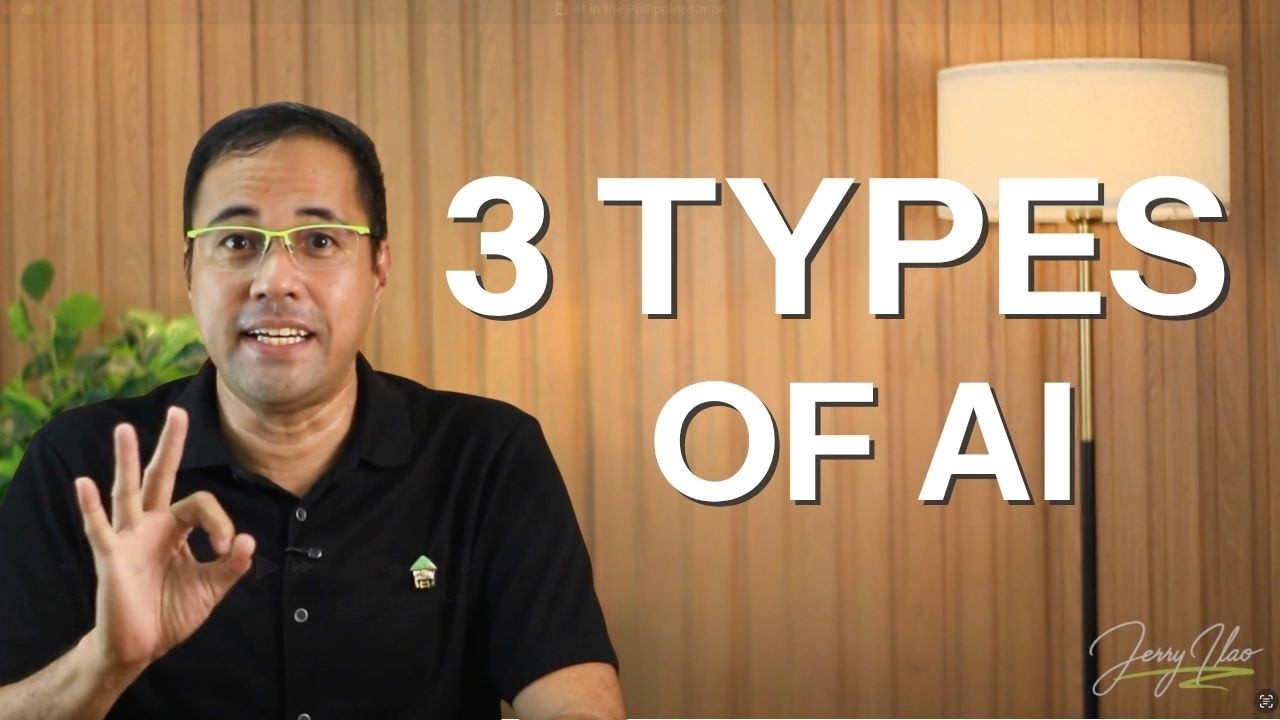
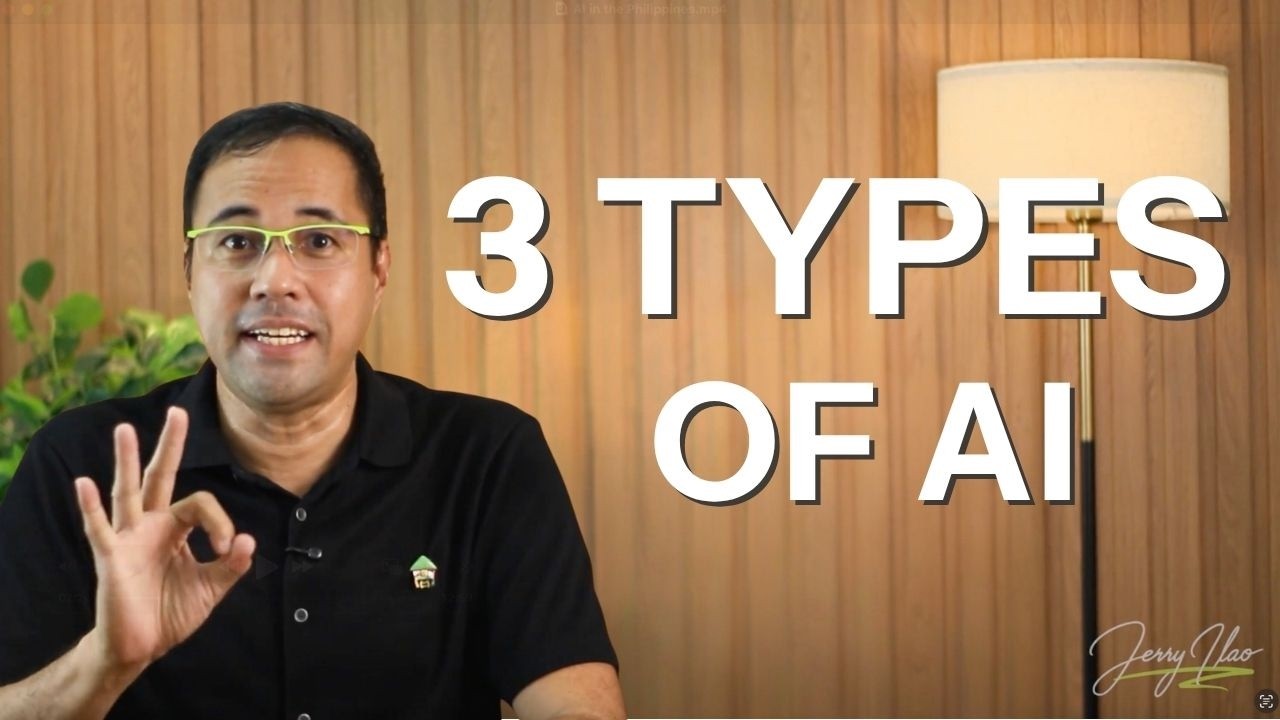
The clearest way to make sense of this is to separate AI into three practical categories:
- AI that predicts
- AI that recommends
- AI that creates
Once these three types are understood, AI becomes easier to spot inside existing systems and easier to use strategically.
What AI Actually Means in Business
A simple business definition of AI is this: a computer system that learns from data and makes decisions.
That definition is broader and more useful than the popular idea that AI means a chatbot that writes content. Generative tools such as ChatGPT, Gemini, Claude, or Midjourney are only one part of the landscape.
Thinking that AI equals ChatGPT is like recognizing a steering wheel and assuming you understand the whole car. The tool may be visible, but the larger system remains unseen.
In practical terms, AI can:
- learn patterns from historical data
- make judgments faster than people can
- operate at scale across massive volumes of information
- support decisions without getting tired or forgetting past patterns
That does not mean AI is perfect. It is powerful, but it works best as part of a larger process. Human review, policy, and business context still matter.
With that foundation in place, the three major types become much easier to understand.
Type 1: AI That Predicts
The first type of AI is prediction AI. This is the form many businesses already use without realizing it.
Prediction AI takes large amounts of data, finds patterns, and estimates what is likely to happen next. It helps systems make decisions faster than any human team could in real time.
Common examples of prediction AI
One familiar example is navigation software. A tool like Waze processes real-time information from millions of drivers, including traffic speed, accidents, road closures, and congestion patterns. It then predicts the fastest route and reroutes people around delays.
Another common example is banking and fraud detection. Financial apps learn what normal behavior looks like for an account, including transaction amounts, log-in locations, timing, and frequency. When something unusual appears, the system can flag it as suspicious.
Even when scams still happen, that does not mean prediction AI is failing. It means the technology is reducing a much larger volume of risk behind the scenes. Millions of transactions occur every day, and no human team can monitor them all instantly. AI filters the majority of suspicious activity before it ever reaches manual review.
The same logic applies across business functions:
- Demand forecasting for next month’s sales volume
- Inventory optimization to reduce overstocking or shortages
- Risk management through anomaly detection
- HR attrition models that identify employees who may be at risk of leaving
Why prediction AI matters in Philippine businesses
Many businesses in the Philippines already use POS systems, ERPs, accounting software, CRMs, and supply chain tools that include predictive capabilities. The problem is not always access. Often, the problem is awareness.
Companies may be paying for features such as predictive analytics or anomaly detection without activating them. In other cases, teams use only the basic reporting layer of a system while ignoring the machine-learning functions built into the product.
That creates a lost opportunity. Better forecasting can improve procurement. Better anomaly detection can reduce losses. Better risk prediction can improve operational control.
Action step: ask vendors what AI features are turned off
A useful first move is simple: talk to your software vendors.
Ask your providers of POS, ERP, accounting, CRM, and other core platforms one direct question:
Does your system have AI or machine learning features that we are not currently using?
This question can uncover features such as:
- demand forecasting
- predictive analytics
- anomaly detection
- inventory recommendations
- risk alerts
If the answer is yes, evaluate what is already included in your subscription. If the answer is no, that is equally important. It may be time to compare suppliers or ask about available upgrades.
Type 2: AI That Recommends
The second type of AI does not just analyze what might happen. It actively shapes what customers see, click, and buy.
This is recommendation AI.
Recommendation systems study user behavior. They track browsing, clicking, viewing time, prior purchases, and engagement patterns. Then they tailor content or offers to increase the chance of a desired action.
How recommendation AI works in daily life
Streaming platforms are a clear example. Two people in the same household can open Netflix and see different homepages, different rankings, and even different thumbnail images for the same content. The platform is constantly testing what is most likely to capture each user’s attention.
YouTube operates on a similar principle. Search results, suggested videos, and home feeds are all shaped by recommendation systems designed to predict relevance and engagement.
This is not limited to media companies. The same logic already exists in mainstream business tools.
Where recommendation AI appears in business
1. E-commerce platforms
If a company sells through Shopee, Lazada, or its own website, recommendation features may already be built in. Product carousels such as “recommended for you” or “customers also bought” are not just design elements. They are AI-powered or algorithm-driven tools designed to increase basket size and conversion rates.
If these features are not configured properly, revenue is left on the table.
2. Email marketing platforms
Many email tools now include AI-based segmentation and send-time optimization. Instead of a single generic blast to all customers, the system groups customers by behavior and determines who should receive which message and when.
This makes personalization possible even without an in-house data science team.
3. CRM and loyalty programs
If a business has a customer purchase history, recommendation AI can tailor offers much more precisely. A customer who frequently buys coffee can receive a coffee bundle. A customer who buys office supplies can receive a discount tied to that category. Instead of one campaign for everyone, the business can present different offers to different customer groups based on actual behavior.
The result is usually greater relevance and higher conversion rates.
Why recommendation AI is often underused
Teams often think personalization requires building a custom AI engine from scratch. In reality, many of the features already exist inside platforms the company is already paying for.
The missed opportunity usually comes from one of three issues:
- The feature is not enabled
- The data is incomplete or poorly organized
- The marketing team is not aware that the option exists
This is why recommendation AI is one of the easiest forms of AI to activate quickly. The technology may already be available. What is needed is a business decision to use it.
Action step: audit your marketing stack
Review your:
- e-commerce platform
- email marketing tool
- CRM
- loyalty platform
Ask your marketing team:
- Are we using the AI features in our email tool?
- Are recommendation modules enabled in our e-commerce platform?
- Can our CRM personalize offers based on purchase history?
If the answer is no, that is a practical place to start this week.
Type 3: AI That Creates
The third type of AI is the one attracting the most attention today: generative AI, or AI that creates.
These tools can produce text, presentations, images, code, and other outputs from a prompt. Examples include ChatGPT, Gemini, Claude, and Midjourney.
This is also the category that creates the greatest mix of opportunity and risk for businesses in the Philippines.
Why generative AI is different
Prediction AI and recommendation AI often operate quietly inside software systems. Generative AI is more visible because employees interact with it directly. They use it to draft emails, summarize documents, brainstorm ideas, build slides, or write code.
That speed can produce major productivity gains. But it also creates governance challenges, especially when employees use personal accounts or free tools outside official company systems.
The rise of shadow AI
A major concern is shadow AI. This happens when employees use AI tools without formal approval or without the company knowing how those tools are being used.
Available reports cited in the source material point to a serious pattern in the Philippines:
- roughly 83% of Filipinos use their own personal accounts to access free AI tools for work
- about 57% input sensitive company data into those tools
Most employees are not acting with bad intent. Usually, they are trying to work faster. The problem is that they may not understand how some AI tools handle data. In some cases, prompts and uploaded content may be stored. In some setups, that information may be used to improve the model or become accessible in ways the company did not intend.
This turns a productivity shortcut into a data privacy, confidentiality, and compliance issue.
Why banning AI usually fails
A total ban often sounds safe, but it rarely works in practice. When people feel pressure to move fast, they find unofficial ways to use the tools anyway. That makes the risk less visible, not less real.
A better approach is controlled adoption. Give teams approved options. Define boundaries. Make responsible use easier than hidden use.
Action step: create a one-page AI use policy
The most urgent action for business leaders is to establish a simple policy. It does not need to be long or legalistic. A useful first version can fit on one page.
At a minimum, it should answer three questions:
- What tools are approved?
- What data is off-limits?
- Who should employees ask if they are unsure?
That one-page document can be drafted quickly in a Monday meeting, especially if leadership focuses on practical decisions rather than abstract policy language.
The goal is not to eliminate experimentation. The goal is to prevent careless use of sensitive company information while enabling responsible productivity gains.
A Simple AI Audit for Your Next Monday Meeting
If a company does only one thing after reading this, it should conduct a short AI audit with department heads.
This can be a 15-minute conversation built around three questions:
- What software does your team use daily?
- Which of those tools have AI features we are not using?
- Is anyone using ChatGPT or other AI tools that the company has not approved?
These questions help uncover both value and risk.
On the value side, the business may discover underused features in systems it is already paying for. On the risk side, the business may identify hidden data exposure arising from unsanctioned AI use.
Even if leadership cannot answer every AI question today, these three prompts create a practical starting point.
Why This Matters Now
The most important insight is simple: AI is already inside the business.
It may be quietly predicting demand in a software module that no one configured. It may be recommending products in an e-commerce storefront. Or it may be creating client-facing drafts through employee use of public generative AI tools.
If leadership does not know where AI is operating, it cannot manage it strategically. It cannot capture the upside. It cannot reduce the downside.
That is why AI in the Philippines should no longer be framed only as a technology adoption topic. It is now a management, operations, marketing, and governance topic.
The companies that move well will not necessarily be the ones building their own models. More often, they will be the ones who:
- Identify AI already built into their current stack
- Switch on the useful features they are already paying for
- Personalize customer experiences more effectively
- Set clear rules for generative AI use
- Treat AI as part of a system, not a magic replacement for judgment
The Three Types of AI, Summarized
A practical summary looks like this:
- AI that predicts helps estimate what is likely to happen next. Think routing, fraud alerts, forecasting, inventory planning, and risk detection.
- AI that recommends shapes what customers see and choose. Think personalized product suggestions, content feeds, email segmentation, and tailored offers.
- AI that generates new outputs such as emails, reports, presentations, images, and code. Think ChatGPT, Gemini, Claude, and similar tools.
All three may already exist inside the same company at the same time.
FAQs:
What is the simplest definition of AI for business?
AI is a computer system that learns from data and makes decisions. In business, that can mean predicting outcomes, recommending actions, or generating content.
Is AI already being used by businesses in the Philippines?
Yes. Many Philippine businesses already use AI through banking apps, navigation tools, CRMs, e-commerce platforms, accounting systems, and generative AI tools used by employees. In many cases, the business is using AI without labeling it as such.
What are the three types of AI discussed here?
The three types are AI that predicts, AI that recommends, and AI that creates. These categories help business leaders identify where AI already exists inside their operations.
How can I find AI features in software we already use?
Ask your vendors directly whether your current systems include AI or machine learning features that are not turned on. Review your POS, ERP, CRM, accounting software, marketing tools, and e-commerce platform.
What is shadow AI?
Shadow AI refers to employees using AI tools without company approval or outside official processes. This often happens when staff use personal accounts on free AI tools for work-related tasks.
Should a business ban ChatGPT and similar tools?
A full ban usually does not work well because employees may still use the tools unofficially. A better approach is to define approved tools, prohibited data, and a clear escalation path for questions.
What should be included in a one-page AI policy?
A simple AI policy should state which tools are approved, what data cannot be entered into AI systems, and who employees should contact when they are unsure. This creates practical guidance without slowing the organization down.
Final Takeaway
The question is no longer whether to adopt AI someday. The more immediate question is whether your business has taken control of the AI already in place.
Start by identifying the three types already operating around you. Look for what predicts, what recommends, and what creates. Then turn hidden AI into intentional AI.
That shift alone can improve operations, sharpen marketing, reduce risk, and give leadership a clearer handle on where the organization is headed next.