
Many companies assume AI adoption fails because the tools are confusing, the training is weak, or employees are resistant to change. But in many workplaces, especially in Filipino business settings, the deeper problem is emotional rather than technical.
That problem is FOBO, or the fear of being obsolete.
Unlike FOMO, the fear of missing out, FOBO is rarely spoken out loud. Employees do not usually say, “I’m afraid AI will make my role irrelevant.” Instead, they nod in meetings, agree to try the tools, and quietly continue doing things the old way. Some may even claim they are already using AI even when little has changed in their output.
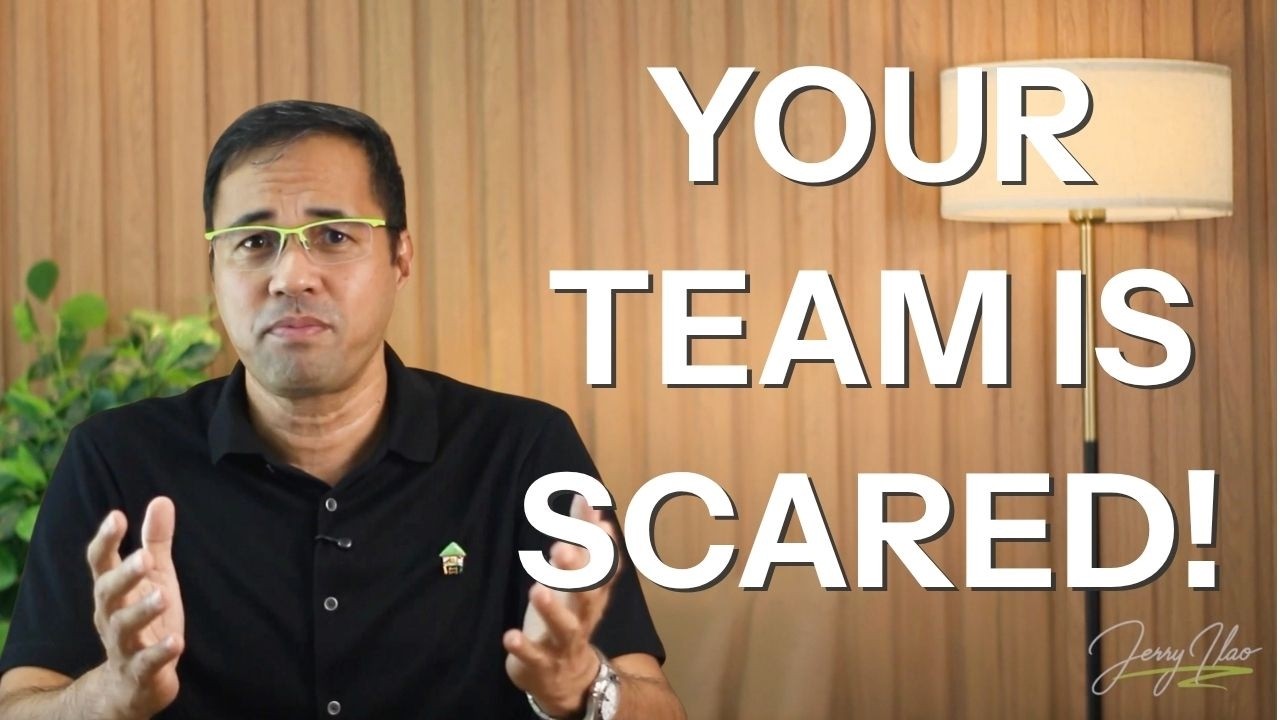
That silence is what makes FOBO so dangerous. It slows AI upskilling, weakens adoption, and creates hidden resistance across teams. If leaders do not address it directly, even the best AI rollout can stall.
The good news is that FOBO is not a permanent barrier. It can be reduced through clear leadership, honest communication, and practical changes in how teams learn. The real solution is not better technology alone. It is creating enough clarity and trust that people believe AI will upgrade their work rather than erase their value.
What FOBO really means in the workplace
FOBO is the fear that a new technology will make a person’s existing skills, experience, or role less valuable over time. It is not just the fear of learning a new tool. It is the fear of what learning that tool might imply.
For many employees, the hidden thought is this: If AI works well, what happens to me?
That question goes beyond productivity. It touches income, status, identity, and security. It also explains why AI resistance often appears irrational from a management perspective. An employee may understand that AI can save time, but still avoid it because using it feels like helping build the system that could eventually replace them.
This pattern is not unique to AI. Every major technology shift has created similar anxieties.
Think about teachers who built careers around paper-based systems and then had to move to digital tools. Think about marketers who mastered TV, radio, and print but refused to learn social media, e-commerce, and digital analytics. Think about IT professionals who built their expertise around on-premise servers and dismissed cloud platforms as unnecessary.
In each case, the technology itself did not directly remove people. But industries evolved, and the people who refused to adapt gradually became less relevant.
That is the real threat behind FOBO. The danger is often not the tool. The danger is choosing not to learn while the market moves on.
Why FOBO is especially hard to detect
FOBO hides behind polite behavior and surface-level compliance.
In many workplaces, employees do not openly challenge leaders’ decisions. In Filipino settings, this can be intensified by hiya, the social discomfort of appearing ignorant, unprepared, or difficult. So instead of asking basic questions about AI, people may stay quiet. Instead of admitting fear, they may act supportive while privately avoiding the change.
This creates a dangerous illusion for management. The rollout appears to be fine because no one is objecting. But under the surface, actual adoption remains low.
Two statistics mentioned in the discussion help explain the scale of the problem:
- 52% of workers worry about AI’s impact on their future in the workplace.
- 45% admit to pretending to understand an AI tool in a meeting just to avoid looking incompetent.
Those numbers reveal something important. AI anxiety is not limited to a few laggards. It is widespread, and it often coexists with silence.
That is why leadership has to look beyond formal adoption metrics. If your team says they are using AI, but productivity, workflow, and decision-making have not materially changed, FOBO may be the missing explanation.
The irony leaders need to explain clearly
The biggest misunderstanding around AI is the belief that learning it makes a person easier to replace.
In reality, the opposite is often true.
The employee who learns AI becomes more capable, more productive, and more valuable. They can produce higher output, move faster, and contribute at a higher level. Meanwhile, the employee who avoids AI may stay in the same place while everyone around them accelerates.
Over time, that gap becomes visible.
Employees need to hear this clearly: AI does not automatically replace people. It often changes what kind of work creates value.
If repetitive or low-value tasks are automated, the role can shift toward judgment, communication, quality control, analysis, client management, and strategic thinking. That is not disappearance. That is an upgrade, provided the employee is supported through the transition.
Fix #1: Have the honest conversation nobody is having
The first step in addressing the fear of obsolescence is to name it directly.
Most leaders announce AI tools in terms of efficiency and expect adoption to follow. But employees are often interpreting the message through a different lens. They are not only hearing, “This will help us work faster.” They may also be hearing, “We may need fewer people.”
If leaders never address that hidden concern, people will fill the silence with their own assumptions.
A better approach is to say the hard part out loud. Explain that AI is being introduced to improve productivity, not to quietly threaten people. State clearly that team members who learn to use AI well will become more valuable to the business, not less.
This only works if it is backed by action. Employees will not trust a reassuring speech if every signal around them suggests the opposite.
To make this credible:
- Recognize employees who use AI well.
- Publicly connect AI capability to growth and opportunity.
- Show that improved productivity leads to broader responsibilities, not immediate punishment through workload or redundancy.
- Reinforce that the company wants people to evolve with the technology.
The key message is simple: Learn AI, and you will grow.
That is very different from: Learn AI or else.
Fix #2: Show people what their job looks like after AI
Fear grows in uncertainty.
Many employees know what their job is today, but they cannot picture what their role looks like after AI enters the workflow. That unknown space becomes fertile ground for anxiety.
One of the most practical ways to reduce FOBO is to map each role in three parts:
- What the employee does manually today
- What AI can take over or assist with
- What higher-value work can the employee now focus on
This turns AI from a vague threat into a visible redesign of work.
For example, imagine an administrative assistant who spends three hours a day formatting reports. If AI now handles much of that formatting, those hours can be redirected toward client follow-ups, quality checks, and the preparation of useful insights for leadership. The role has not vanished. It has shifted upward.
That is an important distinction. Employees often fear a blank future. Leaders need to replace that blank space with a believable before-and-after picture.
Role mapping also helps managers think more responsibly about AI adoption. Instead of treating automation as the endpoint, they can define how saved time becomes strategic capacity.
When people can clearly see how their work evolves, FOBO begins to shrink.
Fix #3: Make AI a team skill, not an individual threat
AI adoption often fails because it is introduced as a solo challenge.
A leader announces a new tool, gives basic instructions, and expects each employee to figure it out on their own. In that setup, every person faces the learning curve privately. Confusion stays hidden. Fear becomes personal. Experimentation feels risky.
That is exactly the environment where the fear of obsolescence grows stronger.
A better model is to make AI learning social and shared.
One practical method is to hold a weekly 30-minute AI session where each team member shares one thing they tried with AI that week. They can briefly explain:
- What they attempted
- What worked
- What did not work
- What surprised them
The point is not perfection. The point is normalization.
When a team sees that everyone is experimenting, struggling, and improving together, AI stops feeling like an individual test of worth. It becomes a shared skill under development.
This also creates a healthier learning culture. Instead of pretending to understand, employees can openly compare experiences. Instead of hiding failed prompts or weak results, they can learn from them.
Another useful idea is to build a prompt vault or shared library of successful AI use cases. Every useful prompt, workflow, or output can be stored so the next person does not have to start from zero. Over time, that shared resource lowers friction, reduces fear, and raises team capability.
People are less likely to feel obsolete when they know they are not navigating change alone.
Fix #4: Make a promise and mean it
This is the leadership move many organizations skip, even though it may matter the most.
No one knows exactly what AI will change over the next two or three years. Not leaders, not vendors, not even the companies building the tools. Employees know this, too. They feel the uncertainty every day.
In that environment, false confidence does not help. What helps is trust.
Leaders do not need to pretend they have all the answers. But they do need to give employees a reason to believe they will not be abandoned during the transition.
The most powerful message sounds like this in spirit:
I do not know exactly how AI will change our work. Nobody does. But if you are willing to learn and grow with this technology, this company will invest in you. We will not leave you behind. Your job is to keep trying. My job is to make sure you have support.
This kind of promise matters because FOBO is not only about technology. It is about whether employees trust leadership during uncertainty.
If people believe they will be left on their own, they will protect themselves by resisting change. If they believe the company will invest in their growth, they are far more likely to engage.
Of course, the promise must be real. It needs to be backed by training time, managerial support, recognition, role redesign, and visible investment in people. Empty reassurance can make trust worse. But a sincere promise, reinforced by action, can change the emotional climate of AI adoption.
How to spot FOBO on your team
FOBO does not always look dramatic. It often appears as quiet disengagement.
A team member who once took initiative may now do only the minimum. Someone who used to be curious and proactive may become unusually passive during AI discussions. A strong performer may avoid experimenting, postpone adoption, or stay vague about how they are using the new tools.
That may look like a performance issue, but it can actually be fear.
Before assuming laziness or resistance, ask whether the person might be worried that AI is making their expertise less valuable.
That is especially important for experienced employees. The people with the deepest institutional knowledge may also feel the greatest threat if they believe the company now values new tools more than years of contribution.
A simple action step for this week
If you want to reduce the fear of being obsolete, start small and make it personal.
Choose one experienced team member who seems quietly disengaged or hesitant about AI. Set up a one-on-one conversation and ask a direct question:
What part of AI worries you most about your role?
Then listen.
Do not jump into a pitch. Do not rush into training mode. Do not immediately try to persuade. The point is to uncover what has been left unsaid.
That conversation can reveal far more than a survey, a rollout memo, or a tool demo. It is often the point at which FOBO begins to loosen, because the employee realizes that the fear can be discussed without shame or punishment.
Why better leadership matters more than better tools
Many AI initiatives fail because organizations treat adoption as a software problem. They focus on platforms, subscriptions, and tutorials while ignoring the emotional reality of change.
But AI upskilling is not just a training issue. It is a leadership issue.
People do not resist AI only because they do not understand the interface. They resist because learning AI can feel like admitting their old skills are no longer enough. That is a deeply human concern, and it requires a human response.
The most effective leaders will be the ones who can do all of the following at the same time:
- Explain the business value of AI clearly
- Reduce uncertainty around role changes
- Create shared learning environments
- Build trust through consistent action
The companies that get this right will not just deploy more AI tools. They will build stronger, more adaptable teams.
FAQs:
What is FOBO in AI adoption?
FOBO means fear of being obsolete. In the context of AI adoption, it describes the fear employees feel that AI may devalue their current skills or eventually render their roles less relevant.
How is FOBO different from resistance to new technology?
Ordinary resistance is often about inconvenience, habit, or lack of training. FOBO is deeper. It is tied to job security, identity, and fear about the future. Someone may appear resistant to AI when they are actually worried about what using it means for their career.
Why do employees hide their fear of being obsolete?
Employees may hide this fear because they do not want to look incompetent, fearful, or out of date. In some workplaces, social pressure or hiya can make people more likely to agree publicly and avoid AI privately.
What is the best first step for leaders dealing with FOBO?
Start with an honest conversation. Clearly explain that AI is meant to improve productivity and help people grow. Then ask employees what worries them most about AI and listen carefully before offering solutions.
Can AI increase employee value instead of replacing employees?
Yes. Employees who learn to use AI effectively often become more productive and more valuable because they can handle higher-level work, produce more output, and contribute in new ways. AI can shift work upward rather than eliminate it outright.
How can companies reduce the fear of being obsolete?
Companies can reduce FOBO by naming the fear directly, mapping what each role looks like after AI, creating team-based learning sessions, and making a credible promise to invest in employees who are willing to learn and adapt.
Final thought
If your team is not adopting AI the way you expected, do not assume the technology is the problem. The real blocker may be the fear of being obsolete.
FOBO thrives in silence, uncertainty, and isolation. It weakens when leaders speak honestly, clarify the future, build shared learning, and offer real support.
The cure is not better software alone. It is better leadership.
And in a time when AI is reshaping how work gets done, that may be the most important competitive advantage of all.