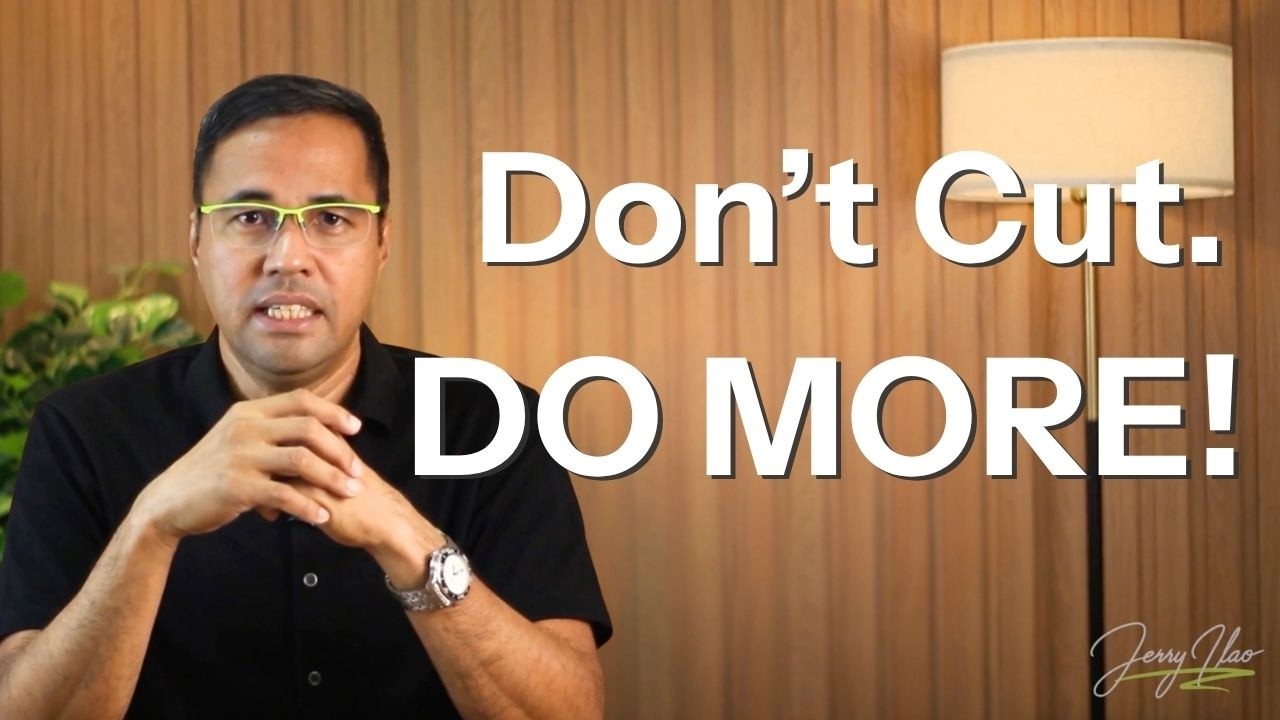

If you are a business owner who has been thinking that AI will let you shrink your team and cut costs, you need to pause and challenge that assumption. The most likely outcome is the opposite: AI will not primarily reduce the amount of work you are expected to do. It will raise the bar on what your customers expect from you.
This is the core idea I call the Raised Bar Effect. It is not about doing less. It is about doing more, faster, and more personally, because customers will come to expect it as the new baseline.
In the Philippine market, we have already lived through a similar shift. And there is also a 160-year-old economic principle that helps explain why this pattern is predictable rather than random. Once you understand it, you can choose the right strategy now instead of reacting after your competitor has set a new standard.
Why “AI will cut costs and headcount” is the wrong mental model
Many organizations approach AI with a single objective: reduce labor costs by automating tasks. That instinct makes sense. AI can draft documents, generate proposals, respond to inquiries, summarize reports, and schedule follow-ups. In the short term, automation can look like fewer people are needed.
But the deeper economic logic works differently. When AI makes a type of work cheaper, it does not eliminate demand. It expands it. And when demand expands, customers do not just get the same service at a lower cost. They get more service, at a higher standard, because that higher standard becomes affordable.
That is the Raised Bar Effect. AI does not reduce what businesses need to do. It raises what customers expect businesses to do.
The e-commerce example: delivery went from “wow” to “expected.”
Think about how shopping worked a few years ago. You would drive to the mall, deal with traffic, search for parking, and then repeat the trip back home. If you wanted to browse, you could spend hours doing it. It was normal. People did not complain because there was no alternative.
Then e-commerce platforms like Lazada and Shopee changed the baseline. You could order from your phone and have it delivered to your door. No traffic. No parking. Less hassle. At first, customers were amazed. Delivery felt special, and whoever offered it gained a competitive advantage.
But once delivery becomes common, it stops being a differentiator. Every seller can now offer it. That “wow” moment fades, and the baseline rises again. Delivery becomes next-day delivery. Then, same-day delivery. Then free shipping. Then cash-on-delivery. The real-time tracking.
The key lesson is this: the competitor needs to be better at everything. They just need to move the baseline first. Once customers experience a higher level of service, they begin to expect it everywhere.
So when a business falls behind, it is rarely because its service has gotten worse. It is because the standard changed and the business did not adapt fast enough.
The 160-year-old paradox that predicts what AI will do
One reason this shift is so difficult for leaders to see is that our intuition is often built on efficiency. If AI makes work more efficient, we assume it should also reduce consumption. Same output, less cost, less labor.
However, an English economist, William Stanley Jevons, noticed something counterintuitive in 1865 when steam engines became more efficient. People assumed Britain would use less coal for the same work. But coal consumption exploded instead.
The reason was not a mystery. Cheaper energy made new industries possible. Factories, railways, steamships, and other uses that were not viable before became affordable. Efficiency did not reduce demand. It expanded it.
Economists call this the Jevons paradox. Satya Nadella has cited this logic in the context of AI, emphasizing that if AI can be built at a fraction of the cost, the implication is not “less AI.” The implication is “AI everywhere.”
Here is the line that should sharpen your strategy: When the cost of doing work goes down, the demand for that work goes up. There is always more demand than businesses initially realize.
It is easier to see in past technology shifts. When companies moved from manual computations to tools like Excel, they did not necessarily hire fewer accountants. They ran more scenarios, produced more reports, and did more analysis. The work multiplied because it became affordable.
Three business changes you should expect next
For Filipino businesses, the Raised Bar Effect will show up in predictable ways. Three changes matter most to decision-makers.
1) “Out of budget” service becomes affordable
AI makes it possible to deliver service elements that once required large teams. Examples include:
- Personalized follow-ups for every client
- Instant proposal generation
- 24/7 responsiveness
- Custom reports tailored to each customer
In this model, a task that used to require, say, a team of 10 becomes possible with a much smaller team because AI handles execution. That not only reduces costs. It increases the feasible scope and frequency of service.
2) Competitors will offer these capabilities sooner than you think
Even if your competitor is not doing it today, they will eventually. Once they do, customers will notice. And customer perception matters more than internal cost accounting.
Think of the delivery pattern again. A few sellers offered delivery, then everyone did. Then the standard rose again. Your competitor will not need to invent a whole new market. They only need to offer the next baseline level of service.
3) Once one business raises the bar, the baseline moves for everyone
Customers rarely keep “one-off” exceptions. If a client receives faster responses, better personalization, and more proactive follow-ups from one provider, they begin to expect those same qualities from all providers.
This is the crucial part: the baseline does not move back. It becomes the new “normal,” and customers will judge you against that standard.
So what should leaders do instead of cutting headcount?
The right strategy is redeployment, not reduction.
When AI automates execution, it handles repetitive, time-consuming tasks such as drafting, compiling, sending, scheduling, and producing structured outputs. Your people then focus on what AI cannot reliably do: judgment calls, client relationships, creative problem solving, and handling exceptions that require human judgment.
This is a role shift. The team does not shrink in value. The team shifts from doing the work to supervising the systems that execute it.
A practical way to assess your readiness
Ask yourself a hard question: what is your current service level? Consider response times, personalization, follow-up cadence, and the consistency with which you deliver value across different client segments.
Now imagine your biggest competitor can deliver the same outcomes at twice the speed and half the cost. What would you need to change to remain competitive?
If you cannot answer that clearly, you may already be behind, because the competition is not only about “quality.” It is about service standards and execution speed.
Practical applications: how to raise the bar in your industry
Raised Bar Effect strategies should be grounded in service design, not just tool adoption. Here are practical ways to apply the idea inside your company.
1) Identify service moments that are expensive today
Look for areas where your business does not offer personalization, higher-frequency follow-ups, or proactive service because they require too much manpower or time.
Common examples across industries include:
- Personalized onboarding
- Weekly check-in reports
- Productive outreach to inactive customers
- Custom proposal options by client segment
2) Map the “execution workload” versus the “judgment workload.”
For each service moment, separate:
- Execution: drafting, generating content, formatting, sending, scheduling, summarizing
- Judgment: relationship management, exception handling, negotiation, and final decision-making
AI is strongest at execution. Humans are strongest at judgment. When you redesign processes to match those strengths, you redeploy effort rather than cut it.
3) Pilot one “previously unaffordable” offer
Instead of trying to automate everything, start with one offer that customers will immediately feel. For example, personalized onboarding or weekly performance reports.
If the offer was previously too expensive to deliver consistently, AI can change the unit economics. That is where you raise the bar first.
4) Prepare for the baseline shift before competitors force it
Leaders should treat AI adoption as a service standard strategy. Once competitors raise the bar, the market will expect it. The winner is typically the company that moves first, not the company that waits for perfect readiness.
Actionable takeaways for leadership teams
Here is a clear leadership action step for this week.
- Before your next leadership meeting, list three things your business has never offered because they were too expensive or took too much manpower.
- For each item, ask: with AI handling the execution, could our current team deliver it?
- If the answer is yes, treat it as your competitive advantage to launch early.
This approach flips the debate. Instead of “How do we cut costs?” you ask, “What service standard can we now afford to deliver?”
FAQs:
Does AI actually eliminate jobs or only change roles?
AI can automate execution work, but the market impact often expands what customers expect. The more realistic outcome is a shift in roles: teams redeploy from doing repetitive tasks to handling judgment calls, exceptions, and relationship work.
How can a company tell if it is about to be outcompeted by a higher service baseline?
If competitors can deliver faster, more personalized service at lower cost, customers will notice and begin to expect that standard. A practical check is to identify service moments you currently avoid because they are too expensive or manpower-heavy. Those are often the first areas competitors will improve using AI.
What is the Jevons paradox, and why does it matter for AI strategy?
The Jevons paradox describes how efficiency gains can increase total consumption. Cheaper work creates more demand because new possibilities become affordable. In AI terms, lower cost does not mean less AI work; it means AI becomes widespread and customers demand more.
What is the quickest way to “raise the bar” without overhauling everything?
Start with one service that was previously too expensive to deliver consistently. Redesign the workflow so that AI handles execution, while your team focuses on judgment and exceptions. Pilot it with a defined client segment, measure impact, then scale.
Conclusion: the competitive race is about standards, not headcount
The future of AI in business is not fewer people. It is higher standards.
If you cut headcount solely to reduce costs, you may inadvertently remove the capacity needed to handle exceptions, manage relationships, and solve creative problems as expectations rise. Meanwhile, competitors using AI to deliver more service at lower cost will shape customer expectations for your entire industry.
The winning move is to redeploy. Use AI to make “more” affordable: more personalization, more responsiveness, more proactive follow-up, and more tailored output. Then your team can focus on what only humans can do well.
Because the Raised Bar Effect is coming whether you plan for it or not. The only real question is whether you raise the bar first.