
Leaders today are overwhelmed.
Not just with AI, but with the sheer volume of new things we’re expected to learn every single week. A new framework goes viral on Monday. A new tool gets announced on Wednesday. By Friday, someone at a conference is already talking about the next wave.
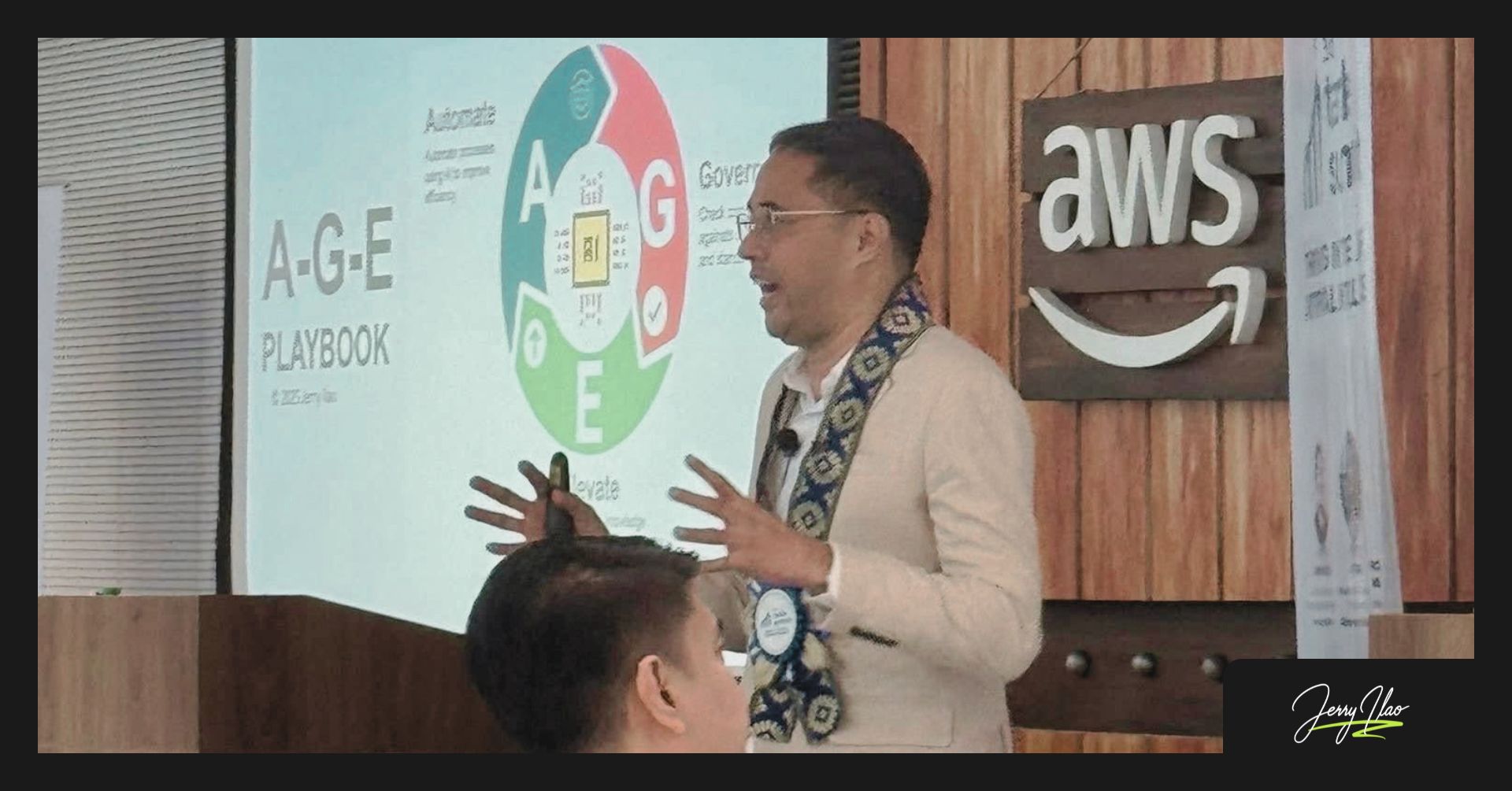
I felt this tension directly at the 3rd Tarkie Summit. I shared a message with the room that I want to share here too.
Our real advantage today is not what we already know. It is how fast we can learn new things and adapt.
Why your current knowledge has a shorter shelf life than you think
Think about what counted as advanced knowledge in your field two years ago. Some of it still holds. But a good portion has been replaced by faster tools, new mental models, or entirely different approaches to the same problems.
This is not about being dramatic. It is just the pace we are operating in now.
In our work with companies through PAIBA and Olern, we see this pattern repeat: leaders who stay relevant are not necessarily the ones with the most experience. They are the ones who built systems for learning continuously. Experience matters, but a system for updating what you know matters more.
The question most leaders avoid is a simple one: what is your actual system for staying current?
The honest problem with how most of us try to keep up
Like many of you, I watch videos, scroll articles, and try to keep up with the latest trends.
But let’s be honest, we don’t always have time to watch 30 to 60-minute videos just to pick up a few key insights, right? We’re busy with so many things that setting aside time to learn new things is constantly a challenge, isn’t it?
I have sat through long videos where the one insight I actually needed was buried 40 minutes in. That is not a learning system. That is a gamble.
The cost is not just time. When we skip learning because it takes too long, we fall behind without noticing. And when the gap becomes visible, it is already significant. The teams and leaders who keep showing up with fresh thinking are not working harder than you. They have a faster feedback loop.
What my team built to solve this
So I talked to my team and we decided to do something about it.
We built an internal app that uses an AI YouTube summarizer to extract key insights from any video and then personalize those takeaways for my role and industry. No more sitting through hours of content to find the parts that matter. I get the key insights in minutes, shaped around what I need as a leader.
It has become my personal tool for learning new things fast.
The logic is straightforward. Instead of watching a 45-minute video on AI governance, supply chain shifts, or sales strategy, I input the video and ask the tool to surface what is most relevant for someone running a mid-market business in the Philippines. What used to take an hour now takes under five minutes.
Over a week, that adds up to hours recovered. Over a month, it compounds into a meaningful edge.
How to build your own AI-powered learning system
You do not need a development team to start doing a version of this. Here are three ways to apply the same approach starting this week.
Identify one content bottleneck and target it first. Most leaders fall behind in one specific area more than others: AI developments, industry trends, sales methodology, leadership frameworks. Pick one. Build your AI learning system around that single area before expanding. A focused tool you actually use beats a comprehensive one you set up and forget.
Use an AI YouTube summarizer on videos you have been skipping. Several tools already handle this well, and the quality has improved considerably over the past year. Paste in a YouTube URL, tell the tool your role and what you are trying to learn, and ask for the five insights most relevant to your context. You get a personalized summary in under a minute. Start with the backlog of videos you have been meaning to watch. Clear that first.
Build the habit before you build the app. The technology is secondary. What makes this system work is using it daily, even for ten minutes. Once the habit is established around a simple tool, you can layer in more sophisticated automation. In our experience running AI adoption programs through Olern, the teams that succeed are not the ones who started with the most advanced setup. They are the ones who started simple and stayed consistent.
Track what you are learning, not just what you are reading. Every week, write down two or three things you learned from summaries that changed how you think about something. This closes the loop. Learning that does not change your thinking or your decisions is just content consumption. The point is adaptation.
The bigger shift: building systems that learn faster than change
What I shared at the Tarkie Summit is something I believe more firmly every month: the leaders who stay ahead are not the ones who work longer hours or watch more videos. They are the ones who built a system that makes learning faster than the pace of change itself.
That shift is not about willpower. Not about discipline. It is about designing your environment so that staying current is the path of least resistance, not something you squeeze in between meetings.
AI makes this possible in a way it never was before. We can now personalize what we learn, compress how long it takes, and apply it immediately to our specific context.
Now that AI is here, we should use it to make our lives easier and get back some of our time.
Frequently Asked Questions
What is an AI YouTube summarizer and how does it work?
An AI YouTube summarizer is a tool that processes a YouTube video’s transcript and uses AI to extract the main ideas, arguments, and insights in a condensed format. Most tools allow you to specify your context or role so the summary is personalized to what you need, rather than a generic recap of the entire video.
How long does it take to get a summary from an AI YouTube summarizer?
Most AI YouTube summarizer tools return results in under a minute for a standard video. A 45-minute video can typically be summarized in 30 to 60 seconds, giving you a personalized set of key takeaways you can act on immediately without watching the full content.
Can leaders really learn effectively from AI-generated summaries?
For the purpose of staying updated and identifying what to explore further, yes. AI summaries are not a replacement for deep study, but they are an effective filter. In AI adoption programs run through Olern, leaders who used structured summaries consistently reported better awareness of relevant trends than those who relied on ad hoc video watching.
What should I look for when choosing an AI YouTube summarizer for professional use?
Look for a tool that lets you input context about your role or industry so summaries are personalized, not generic. The ability to ask follow-up questions on a specific video is also useful. Prioritize tools that handle long-form content well, since most high-value professional videos run 30 minutes or longer.
How does using an AI learning system connect to staying competitive as a leader?
The speed at which skills and knowledge become outdated has accelerated. Leaders who invest in a system for fast, targeted learning build a compounding advantage over time. An AI YouTube summarizer is one component of that system, specifically for extracting value from the large volume of video content that would otherwise go unwatched.