
Mindset consistently outperforms skillset as the deciding factor in employee performance, particularly during periods of rapid technological change. Teams that develop a growth-oriented, problem-solving mindset adapt faster to AI-driven work environments than teams that focus on technical training alone. Shifting from “I have too much to do” to “I have skills to unlock” is the foundational move.
One thing we’ve realized lately: one of the most important things we need to build in our employees is the right mindset.
When onboarding new team members, the instinct is to focus on technical skills — our products, services, ideal customers, and processes. That makes sense. Those are the things a new hire needs to start contributing.
But we’ve learned that even more important than skills is mindset, especially in a time of rapid change driven by AI.
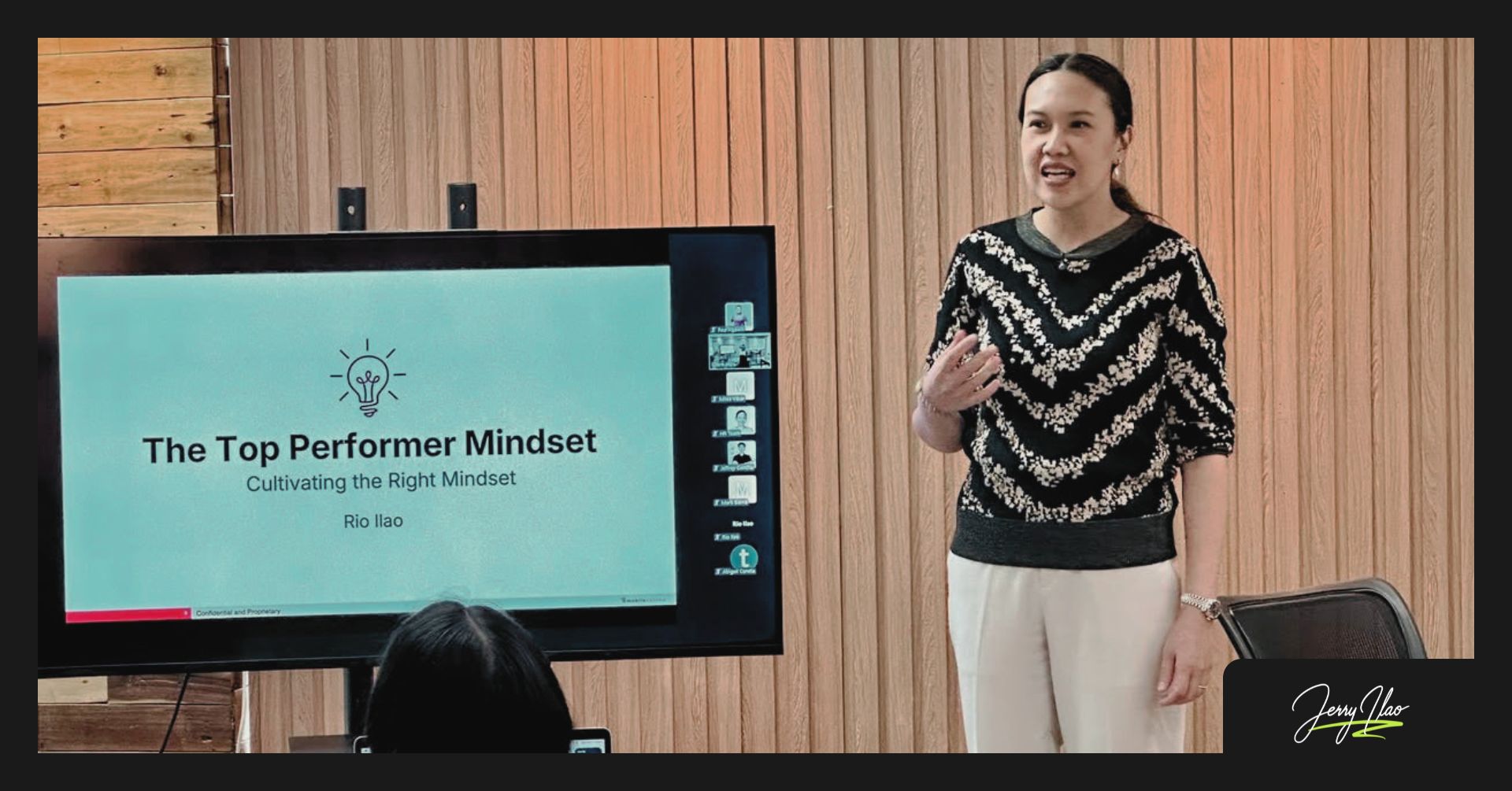
So today, aside from teaching our employees Excel skills, we went back to basics and shared what we call the Top Performers Mindset.
Why onboarding programs miss the most important thing
Most onboarding programs are built around information transfer. Here are your tools. Here is the process. Here is the org chart.
What they leave out is the internal posture the employee brings to all of it.
Two employees can go through the exact same onboarding and absorb the same technical training. One will stagnate. The other will grow. The difference is almost never the skills. It is how they orient toward the work once the formal training ends.
In our work at PAIBA, we have run enough onboarding cycles to see this pattern clearly. The employees who grow fastest are not always the most technically prepared at day one. They are the ones who decided, early on, to treat every task as a chance to get better.
That decision is available to anyone. Our job as leaders is to make it easy to choose.
The mindset vs skillset shift that changes trajectories
The mindset vs skillset difference is easiest to see in how two employees respond to the same workload.
One thinks: “Ang dami namang pinapagawa.” The other thinks: “Ang dami kong skills na maa-unlock.”
Same tasks. Same pressure. Completely different trajectory.
The first employee is counting costs. Every assignment lands as a burden. The second is counting opportunities. Every assignment lands as a chance to get sharper, faster, more valuable. Over twelve months, those two internal frames produce very different careers, very different performance records, and very different levels of value to the team.
It is not a talent gap. It is not a skills gap. It is a mindset gap.
The same dynamic shows up in how employees handle problems. Some come to their manager with an issue and wait. Others come with the issue and two or three possible approaches already mapped out. That second employee is not naturally smarter. They made a choice to be a problem solver instead of just a problem finder.
That choice starts in the mind before it ever shows up in the work output.
This matters even more now. AI tools are changing job descriptions faster than training programs can keep up. The employees who will thrive are not necessarily the ones who knew the tools first. They are the ones with a mindset oriented toward learning, adaptation, and improvement. Skills become outdated. A learning orientation does not.
The “pabibo” problem: when culture punishes top performance
Here is a pattern worth taking seriously — one we see in Filipino workplaces more than it gets acknowledged.
When someone on the team goes above and beyond, performs beyond expectations, or visibly improves faster than their peers, they do not always get recognized. Sometimes, they get teased. “Pabibo.”
It sounds like light ribbing. It rarely is.
That comment, repeated often enough, tells your best performers to pull back. It tells the people watching to stay average. It creates an invisible ceiling that has nothing to do with skills or talent and everything to do with how the team has decided to define belonging. Blending in becomes safer than standing out.
Part of building the Top Performers Mindset is building the culture that supports it. The mindset alone is not enough if the environment actively discourages it.
This is a leadership responsibility. The tone is set from the top. When a manager reacts to a high performer with “ay, pabibo ka na naman” — even as a joke — the message lands as policy. When a leader publicly celebrates someone who went beyond what was required and asks the team to learn from that example, a different message lands.
Culture is not what you write in a values statement. It is what you reward, protect, and model every day.
Four things you can do this week
Reframe the onboarding conversation. The next time you bring on a new team member, add a mindset session before or alongside the technical training. Not a motivational speech — a practical conversation about how this person approaches challenges, feedback, and growth. Ask them directly: “When something feels hard, do you lean in or pull back?” That conversation sets the orientation before the work starts. It takes thirty minutes and it changes what happens in the next six months.
Name the problem-solver expectation out loud. Most employees are never told explicitly that identifying solutions is part of their role. They assume their job is to execute instructions and escalate problems to someone with more authority. State the expectation clearly during onboarding and reinforce it in your first few weeks of working together: we want you to come with approaches, not just symptoms. That expectation, once named, changes how people show up in meetings.
Build a visible mindset vocabulary on your team. Language shapes behavior. When your team hears “Top Performers Mindset” regularly, it creates a shared frame of reference. It becomes a phrase people can invoke when they see someone choosing the growth orientation — “that’s the mindset” — and it becomes a check-in question: “are we in problem-finder mode or problem-solver mode right now?” Shared vocabulary is one of the cheapest team-development tools that most teams leave on the table.
Protect your top performers publicly. The next time someone on your team goes beyond what was required and someone responds with “pabibo,” address it clearly. Not harshly, but directly. A short reply — “actually, let’s ask her how she did that” — reframes what just happened from a social threat into a learning opportunity. Done consistently, that reframe changes team culture faster than any training program.
Mindset first, skills second — in that order
Being a top performer is not just about technical or soft skills. Those matter, and we invest in building them. But they sit on top of something more foundational.
It starts with having the right mindset.
The practical implication: stop treating mindset development as a soft add-on to the real work of training. It is the foundation that makes the rest of the training land. Teach Excel after you have established the orientation that motivates someone to actually use Excel well.
The employees who grow fastest in your organization are not always the most naturally skilled on day one. They are the ones who decided, early, to treat every task as a chance to get better. That decision compounds. It shows in six months. It shows clearly in two years.
Our job as leaders is not to sort people into performers and non-performers. It is to build conditions where more people choose the growth orientation.
That starts before the first technical training session. It starts with the mindset conversation.
What mindset do you think is most important for employees today?
Frequently Asked Questions
What is the Top Performers Mindset?
The Top Performers Mindset is an orientation toward work that treats every task as an opportunity to build skills rather than a cost to absorb. It includes a problem-solving posture (coming with solutions, not just problems), a learning orientation (seeking growth through challenge rather than avoiding it), and a cultural commitment to supporting high performance in others.
Why does mindset matter more than skillset for employees today?
Skills become outdated as tools, platforms, and processes change. A growth-oriented mindset, by contrast, is what enables an employee to keep learning as requirements evolve. In AI-driven work environments where job descriptions shift faster than formal training can keep up, the employees who adapt fastest are the ones with a learning orientation, not necessarily the ones who knew the tools earliest.
What does “pabibo” mean and why does it affect team performance?
“Pabibo” is a Filipino term used to describe someone who is perceived as showing off or performing beyond what the group expects, often as a social criticism. When used in workplace settings, it signals to high performers that exceeding expectations is a social risk. Over time, a culture where “pabibo” is used as a criticism creates an invisible ceiling on performance by discouraging visible excellence.
How do you build a problem-solver mindset in new employees?
Start by naming the expectation explicitly during onboarding: employees are expected to come to problems with possible approaches, not just the problem itself. Reinforce the behavior early — when an employee brings a solution alongside an issue, acknowledge it visibly. Over several weeks, this creates a pattern that becomes the team’s default way of working.
How does mindset training fit into onboarding?
Mindset training works best as a conversation before or alongside the technical training, not after it. A thirty-minute session exploring how the new employee approaches challenge, feedback, and growth sets an orientation that makes all subsequent technical training more effective. The goal is to establish the learning posture before the skills acquisition begins.