
The 10x SuperTeam is a workforce strategy where a company keeps its strongest employees, equips them with AI agents, and redesigns workflows around that pairing. It rejects two extremes: the all-AI one-person company and growth through headcount alone. The goal is a smaller, stronger team, not a replaced one.
For most of the last few decades, companies grew by adding people. AI changes that formula. It does not remove the need for strong human judgment, ownership, and leadership. It removes the pressure to fill seats with whoever is available, which means companies can finally stop settling on talent and build deliberately instead.
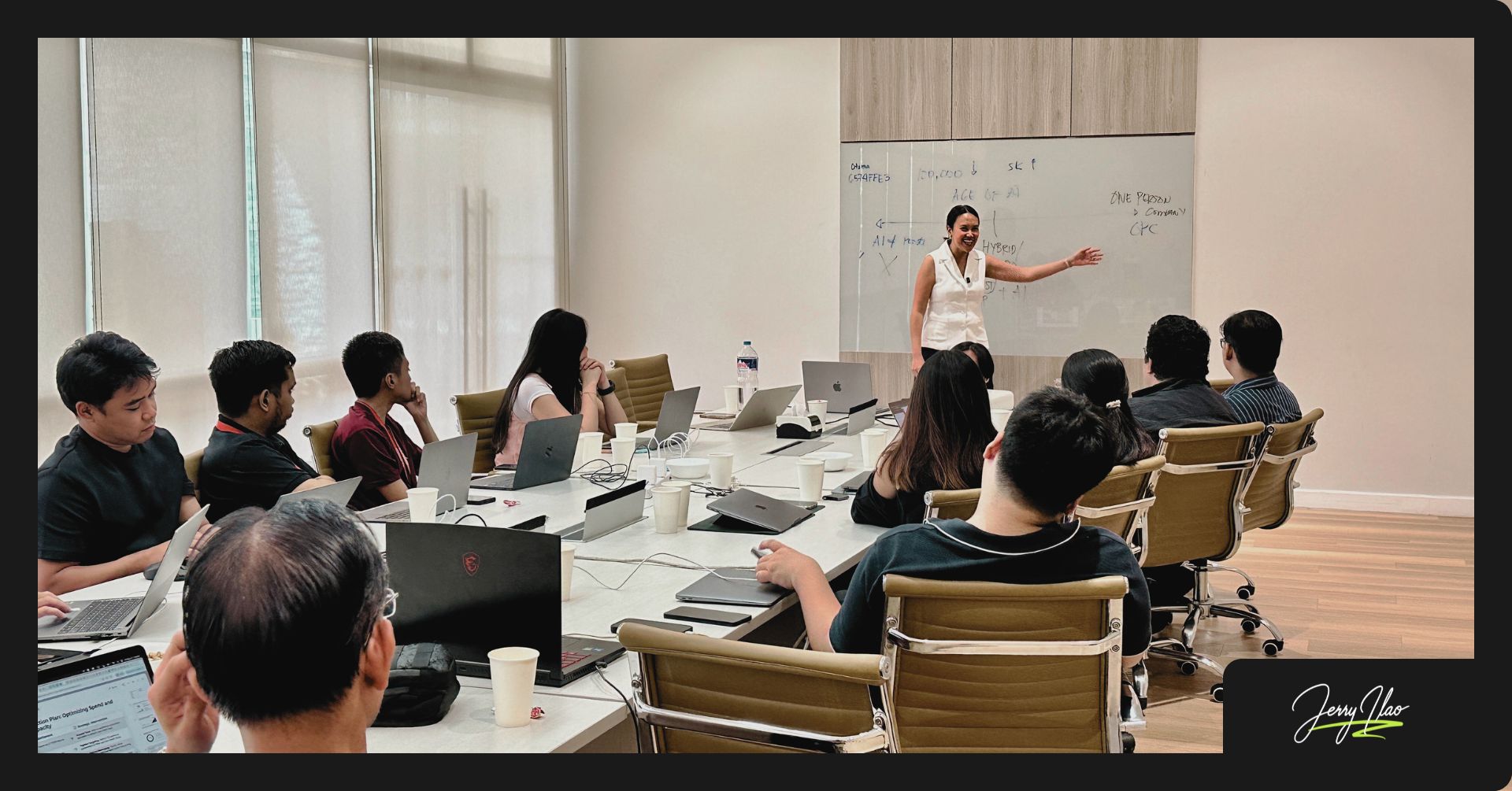
This is the strategy we shared with our team recently.
The future of business is not all AI agents, the way some proponents of the one-person company suggest. But it is also not just adding more human employees, the way most companies have grown for decades. We think the future belongs to the best human employees working with the best AI agents. That is the whole strategy in one line. The rest of this article is about why we believe it and what we are doing about it.
It is a simple idea. Living it out is the harder part.
Why companies kept settling on talent
For a long time, most companies had no real choice but to keep adding people to grow. More revenue meant more work. More work meant more hires. And the hiring rarely kept pace with the need.
So we settled. Be honest with yourself here. How many times have you hired someone who was not the ideal fit, simply because you needed a body on the work as soon as possible? You probably knew within the first month. The role got filled, the work got done, but the team got a little more uneven each time.
That is not a hiring failure. It is what scarcity does to a growing business. When the only lever you have is headcount, you pull it whether the candidate is excellent or just available. Over a few years, that produces exactly what most growing companies have: a team with a few outstanding people, a wide middle, and a handful of hires everyone quietly works around.
AI changes that formula. Not by replacing the people you have, but by changing what the next hire has to carry. When AI agents can take on a meaningful share of the execution work, the pressure to fill a seat with whoever is available drops. It gives companies the option to stop settling.
That option is the real shift, and most leaders are missing it. They look at AI and ask how many people it lets them remove. The better question is what it lets them stop tolerating.
What a 10x SuperTeam actually is
Instead of building large teams with uneven performance, companies can now build smaller teams that are genuinely strong. We call this a 10x SuperTeam.
The name is not about working ten times harder. It is about a small group of strong people, each one supported by AI agents, producing what used to take a team several times their size. The 10x is the output multiple, not the effort multiple.
Building one has three parts. Retain or hire the best people. Equip them with the best AI agents. Then redesign how work gets done so the two actually fit together. That third part is the one most companies skip, and skipping it is why a lot of AI rollouts quietly stall after the first month of excitement.
The goal is not to randomly replace people with AI. The goal is to strategically combine what humans are genuinely better at with what AI agents are genuinely better at.
The human half of the team
Humans bring judgment, ownership, creativity, and leadership. These are not soft extras. They are the parts of the work that carry the most risk and the most upside. A human decides whether a deal is worth pursuing, whether a campaign matches the brand, whether a customer situation needs a careful exception. A human owns the outcome when something goes wrong. You want your strongest people spending their hours here.
The AI half of the team
AI agents execute, monitor, analyze, and support the work at scale. They draft, they sort, they watch dashboards, they pull the first version of an analysis together, they handle the repeatable steps that used to eat a junior employee’s whole week. An agent does not get tired and does not need the task explained twice. What it does need is a clear instruction, the right context, and a human checking its output.
Put plainly: your best people should be making the decisions, and your agents should be carrying the load that used to bury them in execution.
Why the biggest team stops being the advantage
For a long time, headcount was the scoreboard. A bigger team meant a bigger company, more capacity, more credibility. Leaders measured progress partly by how many people reported up to them.
That habit is hard to drop, and it is worth being honest about why. Headcount felt like proof. It was visible, it was countable, and it mapped neatly to ambition.
But the scoreboard has changed. We have seen this pattern hold across the AI deployments and workshops we have run through Tarkie and Olern with Filipino businesses. The teams that pull ahead are rarely the ones with the most people or the most tools. They are the ones that paired strong people with the right agents and then changed the workflow to match. The tool was never the hard part. The redesign was.
A smaller team that is genuinely strong moves faster than a large team carrying uneven performance. It communicates faster. It decides faster. It has fewer handoffs where work goes to wait. And when each strong person is supported by agents that handle the execution load, the gap between the small strong team and the large uneven one only widens.
This is not an argument against hiring. It is an argument against hiring by reflex. Some of the most important moves a company makes are still hires. The point is to make those hires deliberately, because you want that specific person, not because a seat was empty and the work was piling up.
How to build your own 10x SuperTeam
If the 10x SuperTeam is the goal, here is where the work happens. None of this needs a budget or a new platform. It needs a decision.
Decide who you are building around. Before you touch a single AI tool, name the people on your team you would fight to keep. The strategy starts with them. AI agents amplify a strong performer, and they also amplify a weak one. Be honest about who you are amplifying, because the agents will not fix a talent problem. They will magnify whatever is already there.
Audit the work, not the headcount. List what your team actually does in a typical week and sort each task into two columns: needs human judgment, or can be executed and monitored by an agent. Most leaders are surprised by how much sits in the second column. That column is where your agents go first, and it is usually also the column draining your best people’s time.
Equip your best people before you hire anyone new. When a role opens up, pause before posting it. Ask whether the gap is a whole-person gap or an execution gap an agent could cover. Sometimes the answer is still to hire, and that is fine. But asking the question is how you stop settling by reflex instead of by choice.
Redesign one workflow end to end. Do not sprinkle AI across everything at once. Pick one workflow, rebuild it around a clear human-and-agent handoff, and let your team see it run faster than the old way. One finished redesign teaches the team more than ten pilots that never quite land.
You do not need all four done this week. You need one of them started. The leaders who get this right treat it as an ongoing leadership discipline, not a one-time project.
What this comes down to
The companies that pull ahead in the AI era will not be the ones with the biggest teams.
They will be the ones with the best humans, the best AI agents, and the best way of making them work together. That last part, the making them work together, is the part no tool will hand you. It is leadership work, and it is yours to do.
Frequently asked questions
The 10x SuperTeam is a workforce strategy introduced by AI advocate and business leader Jerry Ilao from the Philippines. A company keeps its strongest employees, equips each of them with AI agents, and redesigns its workflows around that human-and-agent pairing. The aim is a smaller team that produces the output of a much larger one, without relying on headcount growth or replacing people entirely with AI.
No. The 10x SuperTeam approach is built on retaining and strengthening your best people, not removing them. AI agents take on execution, monitoring, and analysis so that human employees can focus on judgment, ownership, creativity, and leadership. The goal is to combine human and AI strengths, not to substitute one for the other.
A smaller team of strong performers supported by AI agents moves faster, communicates with fewer handoffs, and decides more quickly than a large team with uneven performance. When each strong employee is supported by agents that handle repeatable work, output rises without the coordination cost that large teams carry.
Start by naming the people you would fight to keep, since the strategy is built around them. Then audit your team’s weekly tasks and sort each one into work that needs human judgment and work an AI agent could execute and monitor. Pick one workflow and redesign it end to end around a human-and-agent handoff before scaling further.
AI agents are well suited to execution, monitoring, analysis, and support work that is repeatable and instruction-driven, such as drafting, sorting, and pulling together first-pass analysis. Humans should handle work that carries judgment and risk: deciding direction, owning outcomes, applying creativity, and leading people. The pairing works when each side does what it is genuinely better at.