

Most entrepreneurs chase legacy — building a business that lasts for generations. But an entrepreneur mindset that serves you long-term is not about scale. It is about knowing what you are building toward, building it well, and being clear about when you have arrived. That clarity is what creates freedom.
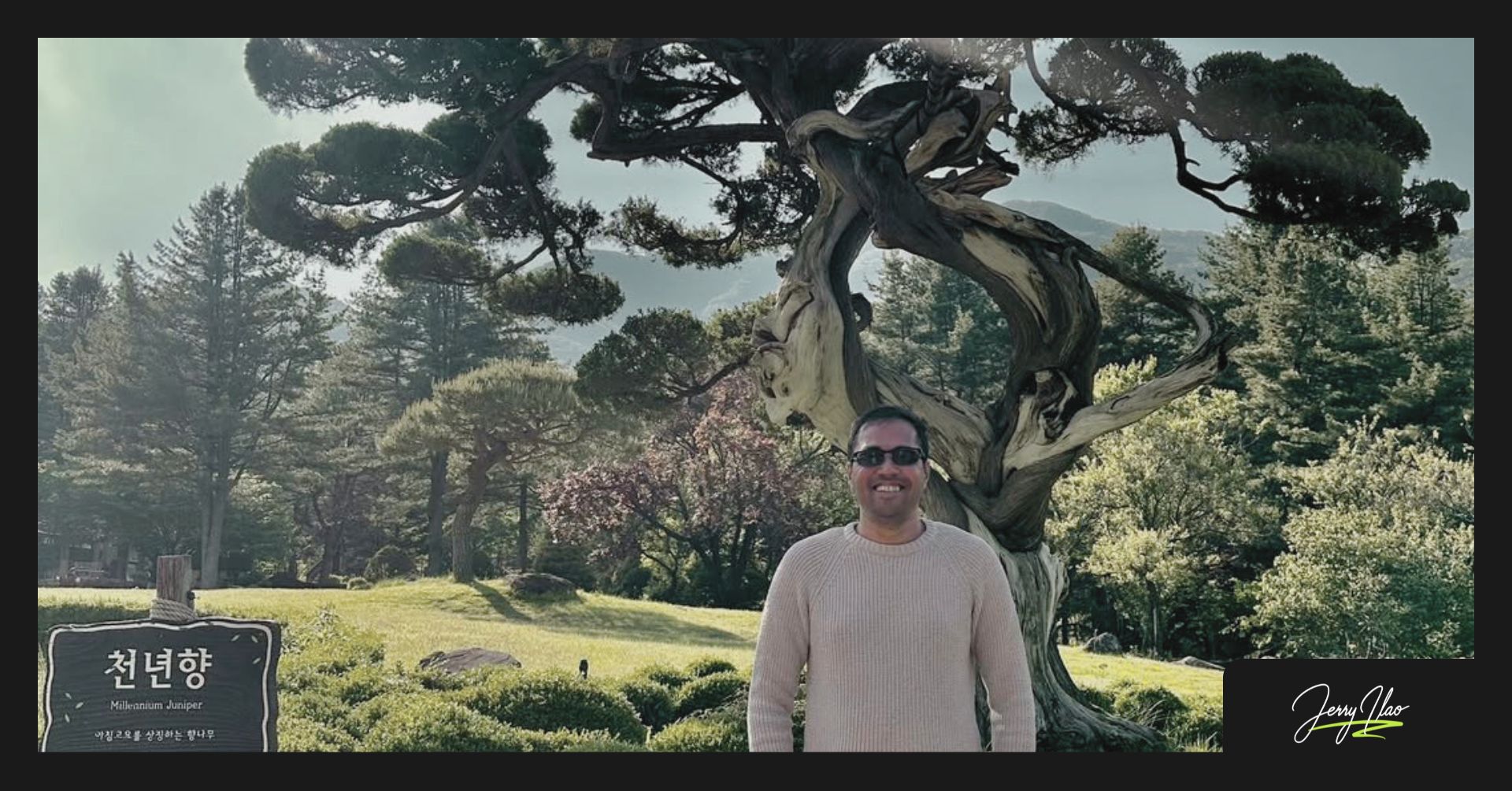
I saw a photo of the Millennium Juniper Tree at the Garden of Morning Calm in South Korea.
The garden is a private arboretum in Gapyeong, about an hour from Seoul. Its centerpiece is a Chinese Juniper estimated to be over 1,000 years old. Not the biggest tree in Korea. Not the most decorated. Just rooted, still growing, still there.
And I thought about how many entrepreneurs I have spoken with who want to build something exactly like that. Something that outlasts them. Something their great-grandchildren can point to.
A legacy. A giant. A future conglomerate.
That’s not my dream.
What most successful entrepreneurs tell me they want
Talk to enough business owners in the Philippines and you start to hear the same thing.
They want to build something that lasts. Something significant. Something that puts their name on the map. The ambition makes sense. We grew up watching big family businesses pass from one generation to the next. We were taught that size means success. That longevity equals impact.
So entrepreneurs set their sights on scale. On legacy. On becoming the next conglomerate.
And then they spend their entire working lives chasing that, right?
Years of deferred vacations. Missed dinners. Celebrations postponed until the business is big enough. Until the team is stable enough. Until the numbers are high enough.
Except “high enough” never comes. Because the goalpost keeps moving.
I see this pattern in almost every conversation I have with founders who have been building for five years or more. The business is performing. The team is solid. Revenue is consistent. But the founder is exhausted and vaguely dissatisfied, because they are measuring themselves against a number they never defined in the first place.
The problem with chasing scale forever
There is a version of the entrepreneur mindset that treats every plateau as a failure.
It borrows its logic from startup culture: the idea that if you are not growing, you are dying. That the only worthy goal is the unicorn, the IPO, the name in Forbes. That stopping to enjoy what you have built is laziness disguised as contentment.
That version of the entrepreneur mindset will exhaust you.
It does not distinguish between building well and building endlessly. It treats rest as a problem to be solved rather than a reward to be earned. And it keeps pushing the moment of enjoyment further into the future — always one more milestone away.
What gets lost in that pursuit is the original reason most people started a business in the first place.
Not because they wanted to be the biggest. Because they wanted to be free.
What I actually want to build
I want to build a business that works well.
Strong enough to generate real income. Reliable enough to support my team. Focused enough to serve our clients at a high level. And structured well enough that we are not constantly in crisis mode.
When we get there, I want to enjoy it.
Spend time. Travel. Plant trees. Share. Live.
That second part matters as much as the first. Building something strong and never stopping to enjoy what you built is not success. That is just a different kind of trap.
In the Philippines, the businesses I most admire are not always the biggest ones. They are the ones that have found their fit — a size that serves their customers well, supports their people well, and does not require the founder to sacrifice everything to keep running. That is a business that lasts. Not because it is relentlessly scaling. Because it is genuinely well-rooted.
The entrepreneur mindset that actually serves you
The entrepreneur mindset I try to operate from is built on three things.
Know what you are building toward. Not in vague terms like “financial freedom” or “leaving something for my kids.” The specific thing. The actual lifestyle. The team size that feels right. The clients you want to serve. If you do not name it, you will keep chasing something you cannot describe, and no amount of revenue will feel like arrival.
Treat your definition of success as a deliberate choice, not a limitation. There is a stigma around the phrase “lifestyle business” in entrepreneurship circles. As if building something sustainable and enjoyable is somehow less worthy than building something massive and exhausting. It is not. A business that supports a great life for your family and your team is a focused ambition. That framing matters because it changes how you make decisions.
Build the enjoyment in now, not later. If you are waiting until the business is stable before you travel, before you rest, before you celebrate — you will wait forever. The business will always have something that needs attention. The milestone you are waiting for will be replaced by the next one. The only time you have is now.
Three things to do this week
Define your “enough” number. Not a range. Not “comfortable.” The specific monthly revenue, the team headcount, the client load that tells you the business is doing what you built it to do. Write it down. If you cannot write it down, you have not defined it yet.
Audit your goals against what you actually want. Pull out your business goals for this year. For each one, ask: does this move me toward the life I want to live, or does it just make the business bigger? Some goals will pass. Some will not. That audit is worth doing.
Schedule one thing you have been deferring. The vacation, the long weekend, the dinner you keep postponing because the timing is not right. Put it on the calendar now. It does not need to wait until the business is ready. The business will never be perfectly ready.
What the tree actually teaches
The Millennium Juniper is not famous because it is the biggest tree in Korea.
It is the centerpiece of the Garden of Morning Calm because it endured. Because it is still there after a thousand years. Because something about its presence makes people stop.
That is what I want to build.
Not the biggest business in the Philippines. Something that lasts because it is well-rooted. Something that the people who work in it, and the people we serve, are genuinely glad exists.
Build with purpose.
Know when enough is enough.
Frequently Asked Questions
What is the entrepreneur mindset that leads to long-term success? An entrepreneur mindset that leads to long-term success is not primarily about scale. It is about knowing what you are building toward, building it well, and being clear about when you have arrived. Founders who define their “enough” — the specific revenue, lifestyle, and team size they are building toward — make better decisions and are more likely to build something sustainable.
Is a lifestyle business a less ambitious goal than building a large company? No. A lifestyle business — a business sized to support a great life for its founder, team, and clients — is a focused ambition, not a lesser one. The distinction is between building endlessly and building intentionally. Many large businesses were built by founders who were chasing scale without a definition of success, and never stopped to enjoy what they had built.
Why do Filipino entrepreneurs often chase scale even when their business is already successful? Many Filipino entrepreneurs were raised in a business culture where size equals success — shaped by watching family conglomerates and being taught that growth is the only valid direction. The result is a default toward scale even when the business is already performing well. Redefining success in personal terms, rather than industry-scale terms, is often what it takes to break that pattern.
How do you know when your business has reached “enough”? Enough is reached when the business generates the income you need, supports your team reliably, serves your clients well, and does not require you to sacrifice the life you built it to support. The challenge is that most founders never define this in advance. Writing down specific numbers and lifestyle criteria — before the business reaches that point — is what makes arrival recognizable when it comes.
What does the Millennium Juniper Tree have to do with business philosophy? The Millennium Juniper at the Garden of Morning Calm in South Korea is a 1,000-year-old Chinese Juniper that has survived not by being the largest tree, but by being well-rooted and consistent. The parallel is that a business built for durability and purpose — rather than endless scale — is more likely to last and to serve well over time.
What is the difference between building for legacy and building for freedom? Building for legacy means building something that outlasts you — often prioritizing scale, recognition, and generational transfer. Building for freedom means building something strong enough to support a great life now, for the founder, the team, and the people served. The difference is in the timeline: legacy defers enjoyment indefinitely, while freedom treats enjoyment as part of the goal, not a reward at the end.